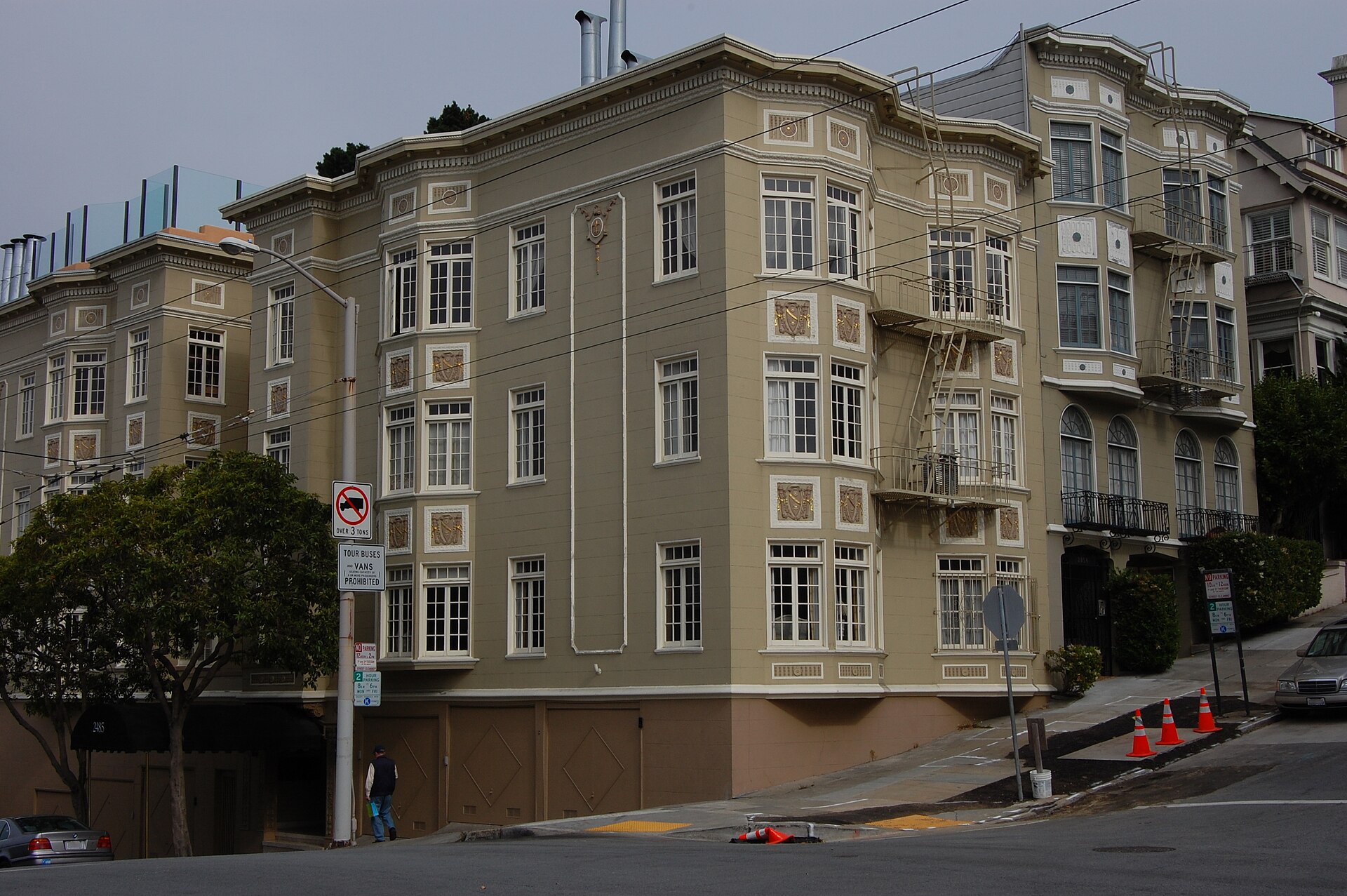
The Union Street boutique and dining district, set in restored Victorians on a former dairy valley between Pacific Heights and the Marina, a notch quieter than the Marina next door.
Cow Hollow takes its name from its past. In the mid-1800s this was a low, marshy valley of freshwater springs and a lagoon, and by the 1860s it was San Francisco's dairy district, with dozens of farms and grazing cattle. The lagoon was filled and the cows were ordered out near the end of the century, and the Victorians and Edwardians that replaced them are the homes you see today.
Union Street is the heart of it, a walkable run of boutiques, cafes, and restaurants tucked into restored Victorian and Edwardian buildings. It has the energy of a real shopping street without quite the volume of the Marina's Chestnut Street a few blocks north, which is part of why people describe Cow Hollow as a notch quieter than the Marina next door.
The housing is a mix of single-family Victorians and Edwardians, elegant flats, and condominiums, on streets that sit lower and flatter than the steep climb up into Pacific Heights. That lower ground is part of the appeal, and it is also part of the history I keep in mind when I read the reports.
The trade-offs are honest ones. Union Street brings real foot traffic, weekend energy, and tight parking, and a home's exact block makes a big difference between lively and calm. What you get is a central, walkable pocket close to the Presidio, the Marina Green, and Pacific Heights.
Cow Hollow is an old dairy valley turned shopping street. I read the low-ground history into the reports so the charm comes without the surprises.
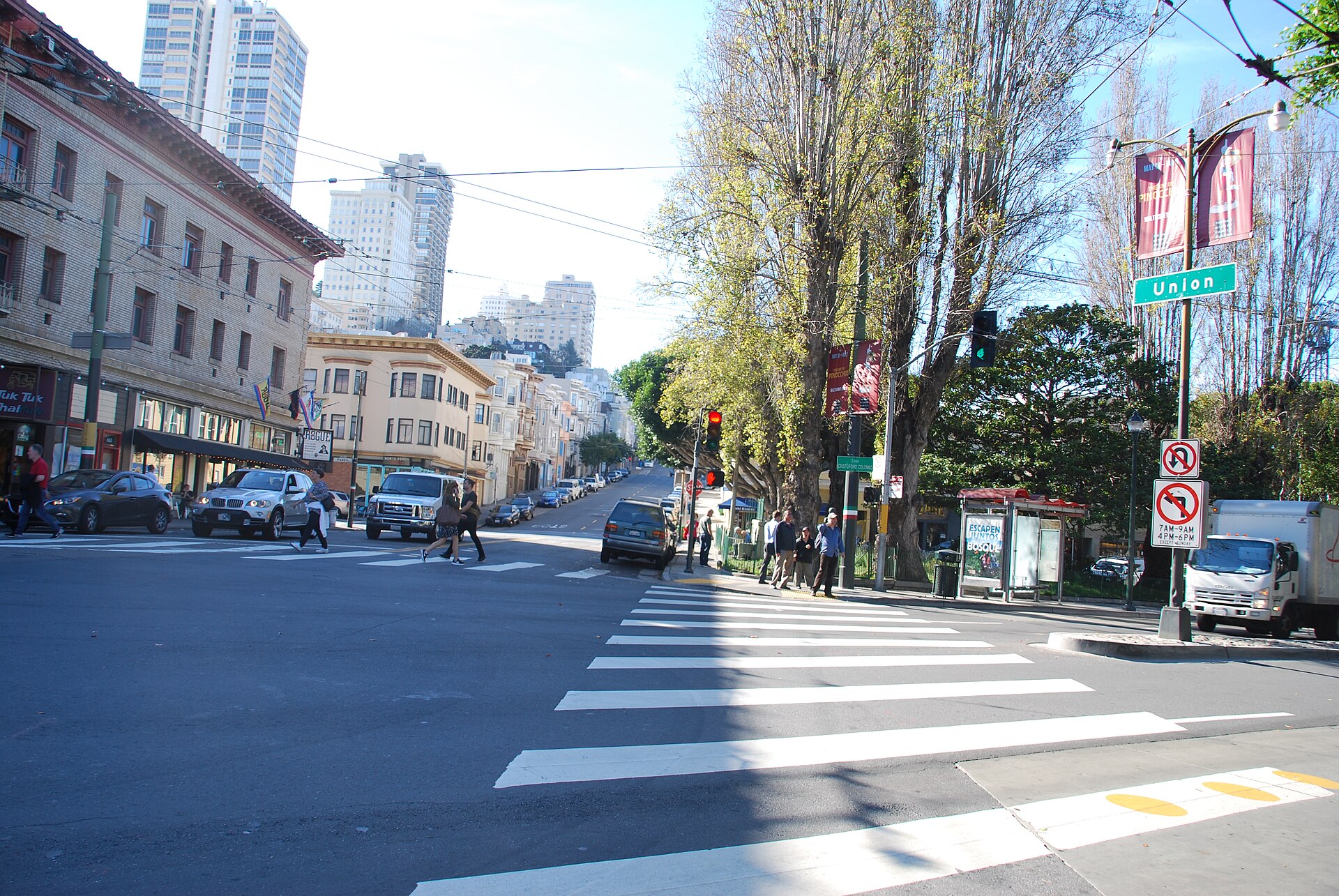

The 41-Union and 45-Union/Stockton run along Union Street toward downtown, and the 22-Fillmore and 28-19th Avenue connect through the area and out to the wider Muni network.
Daily life is very walkable, with Union Street shops and dining at the center and Chestnut Street in the Marina a few blocks north, on streets far gentler than the Pacific Heights climb.
The Golden Gate Bridge, the Presidio, and Highway 101 are a short drive, and downtown is close, but street parking near Union Street is tight, so I check what a given home actually has.
Before you fall for a place, I read the file. My disclosure analyzer flags what matters so you walk in informed, not surprised. Here is what I tend to look for in a Cow Hollow report.
Cow Hollow was a marshy valley with creeks and a filled-in lagoon, and parts of it sit on lower, softer ground than the hills above. I keep that history in mind and read the soils, drainage, and foundation reports closely on lower-lying lots.
Most homes here are pre-war Victorians and Edwardians with original or partly updated wiring, plumbing, and heating. The reports tell the story, and I read the permit history so you know what is original, what was upgraded, and what was done without a permit.
On older properties the private sewer lateral and site drainage matter, especially on lower ground. I look for inspection records and any San Francisco lateral requirements so a quiet problem does not become your problem after closing.
Some multi-unit buildings with parking or living space over an open ground floor fall under San Francisco's soft-story seismic rules. I check whether any required retrofit is done and what it means for the building.
For flats and condominiums, the HOA budget, reserves, minutes, rules, and any litigation matter as much as the unit. I go through the full package before you write.
Start with coffee and the morning shop windows along Union Street.
Take in the small garden park behind the Octagon House before the street gets busy.
Look at the sky-blue 1861 octagon house, one of two left in the city.
Browse the boutiques and small shops tucked into the old Victorians.
Sit down for lunch at a long-running Union Street cafe.
Stroll a few blocks north to the bay-front green and the views toward the Golden Gate Bridge.
The neighborhood's main street, a walkable stretch of boutiques, cafes, and restaurants set in restored Victorian and Edwardian buildings, roughly between Steiner and Van Ness.
A small, picket-fenced garden park on Green Street behind the Octagon House, the only park contained entirely within Cow Hollow.
A sky-blue eight-sided house from 1861 on Gough Street, one of only two octagon houses left in San Francisco and a window into the area's early days.
The ornate red-domed Old Temple near the eastern edge of the neighborhood, an early and architecturally striking landmark on the Cow Hollow border.
A long-running Italian cafe on Union Street, one of the neighborhood's familiar everyday spots for breakfast and lunch.
A short walk north drops you at the Marina Green and the bay-front path, with open views toward the Golden Gate Bridge.
Cow Hollow is a mix of single-family Victorians and Edwardians, elegant flats, and condominiums, on streets that sit lower and flatter than Pacific Heights above. Proximity to Union Street, the exact block, parking, and condition all shape value, and many homes are restored period buildings. For what is actually on the market right now, the live MLS is the real answer.
San Francisco does not assign public schools strictly by address. SFUSD runs a citywide enrollment system, so your home shapes but does not guarantee placement. Sherman Elementary on Union Street serves families in the Cow Hollow and Marina area, though attendance is set through the citywide process, not by address. I walk families through how the current SFUSD process actually plays out for a given home, and I confirm the details for any place you are serious about.
Placement runs through a citywide lottery with tiebreakers, not a strict neighborhood boundary. Address matters, but it is one factor, not a guarantee.
Current ratings and details for every public school in the city.
San Francisco on GreatSchools →The official application, timelines, and how the lottery works.
SFUSD enrollment →They sit right next to each other and share a lot of feel, but Cow Hollow centers on Union Street and runs a notch quieter than the Marina's Chestnut Street. Cow Hollow also climbs a little toward Pacific Heights, while the Marina is flat and closer to the bay.
A mix of single-family Victorians and Edwardians, elegant flats, and condominiums. Many are restored period buildings, and the exact block and proximity to Union Street make a real difference.
Not to worry about, just to check. Cow Hollow was a low valley with creeks and a filled lagoon, so on lower lots I read the soils, drainage, and foundation reports carefully before you write an offer.
Tight, especially on the blocks closest to the shops and on weekends. Some homes have a garage or deeded space and some do not, so I confirm exactly what a given property includes.
San Francisco uses a citywide SFUSD enrollment lottery rather than strict address assignment. I walk families through how the current process tends to play out and point you to the official enrollment details.
Not concerned, just informed. These are old, well-built homes, and the reports tell the real story on foundations, systems, sewer laterals, and past remodels. I read all of it, plus any HOA package, before you write.
Tell me what you are looking for and I will give you a straight read: what is on the market, what fits your budget, and what to know before you write an offer. Straight answers, real information, no waiting around. Reach out anytime, I am an early riser.