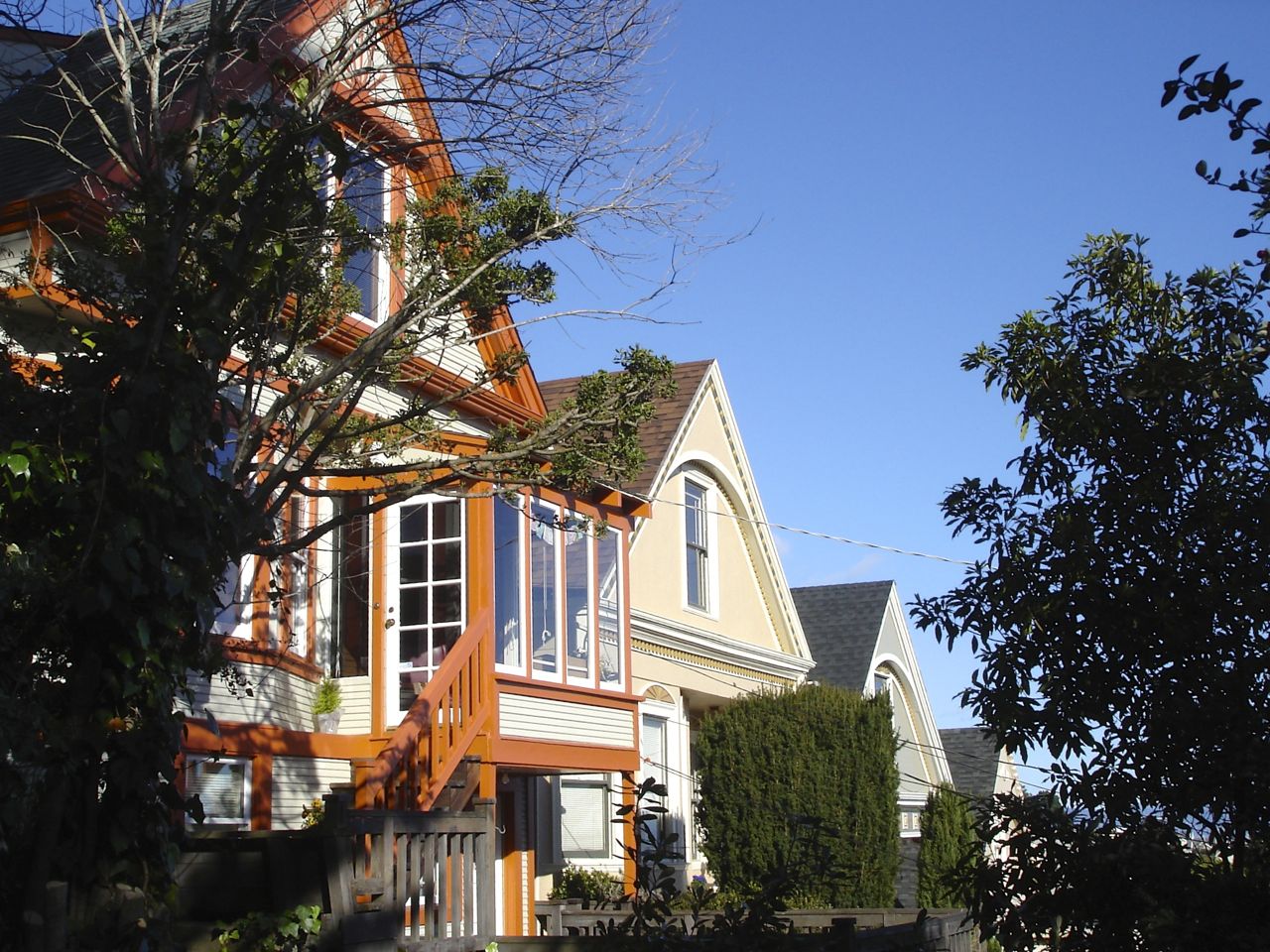
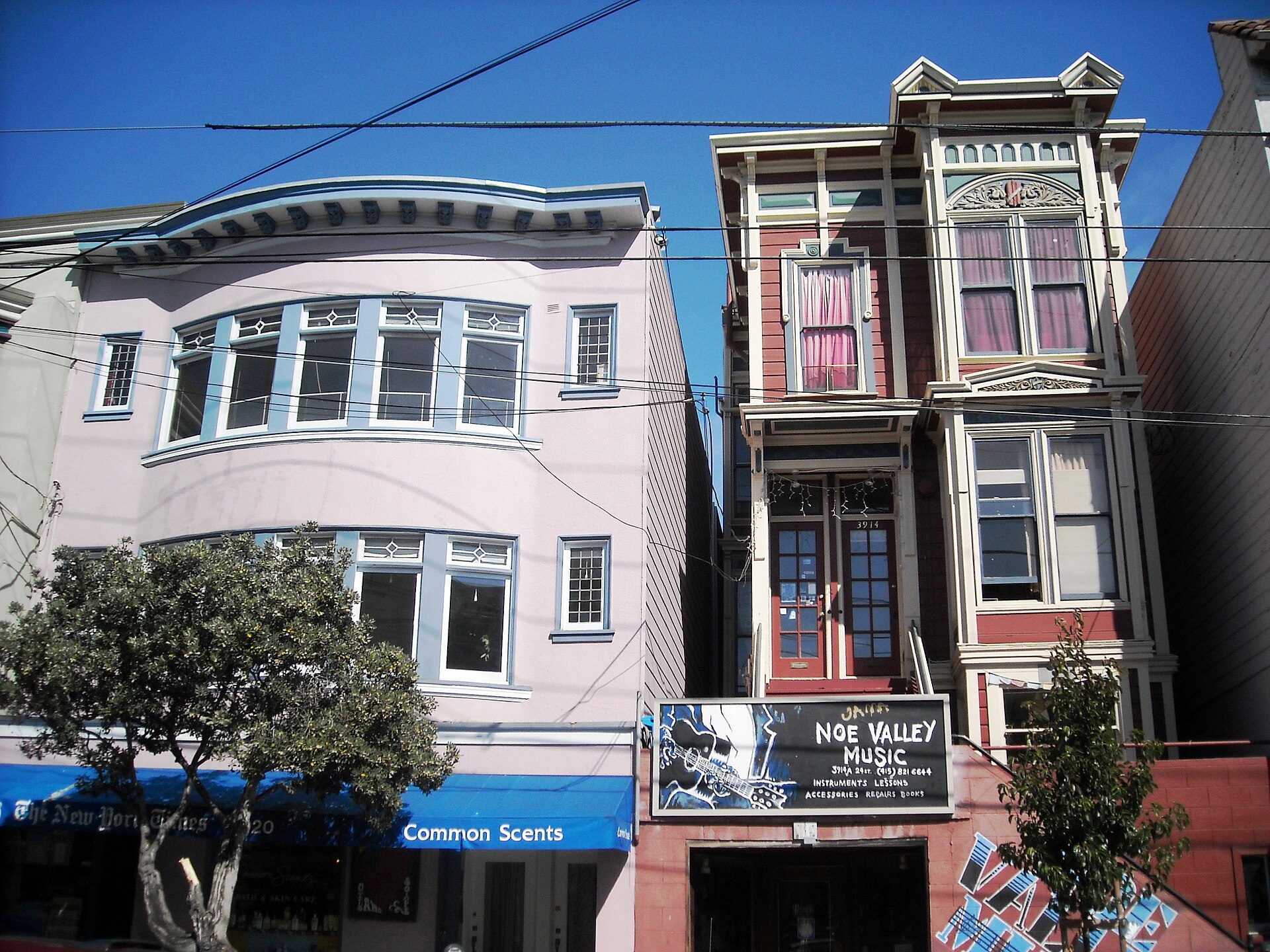
The quintessential San Francisco family neighborhood, where strollers, Victorians, and a true 24th Street village sit in one of the sunniest pockets in the city.
Noe Valley is the neighborhood people picture when they imagine raising a family in San Francisco. It runs along 24th Street between Church and Diamond, with quiet residential blocks climbing the slopes on either side. The pace is calmer than the Mission or the Castro next door, and the streets are lined with some of the highest concentrations of Victorian and Edwardian row houses in the city.
The 24th Street corridor is the heart of it, and it reads like an actual village rather than a strip of chains. Independent cafes, a bookstore, bakeries, restaurants, and the Saturday farmers market at the Town Square give the neighborhood a real center of gravity. People walk to do their errands, and you see the same faces doing it.
The light is a big part of the appeal. Noe Valley sits in the rain shadow of Twin Peaks, so the hills to the west catch much of the fog that blankets the Sunset and Richmond. On a lot of summer days it is clear and warm here while the western edge of the city stays gray. That microclimate is one of the most reliable selling points in the neighborhood.
The trade-offs are honest ones. The blocks off 24th get steep, parking is tight, and the housing stock is old, which means real systems to check. What you get in return is sun, a walkable village, and a family-first feel that is hard to find anywhere else in the city.
In Noe Valley you are buying the sun, the village, and a hundred-year-old house. The first two are easy. The house is the part I dig into.


The J-Church light rail runs along Church Street on the eastern edge and connects to the Market Street subway and downtown. The 24-Divisadero and 48-Quintara buses cross the neighborhood for trips across town.
Daily life centers on 24th Street, where most errands are a short flat walk. The blocks climbing off the corridor get steep quickly, so I am honest about which homes sit on an easy grade and which do not.
Highway 101 and the 280 are a short drive, and downtown is close, but street parking is genuinely tight on the residential blocks, so I check what a given home actually includes for parking.
Before you fall for a place, I read the file. My disclosure analyzer flags what matters so you walk in informed, not surprised. Here is what I tend to look for in a Noe Valley report.
Much of Noe Valley is pre-war Victorian and Edwardian row housing. Foundations, old wiring, galvanized plumbing, and decades of remodels show up in the reports, and I read the permit history so you know what is original, what was upgraded, and what was done without a permit.
Some multi-unit and garage-over-living buildings fall under San Francisco's soft-story seismic retrofit rules. I check whether required work is done and what it means for a building you are considering.
On older homes the private sewer lateral can be aging clay or compromised by roots. San Francisco can require inspection or repair at sale, so I want this looked at before you are surprised by it.
The blocks climbing off 24th Street get steep, which raises questions about retaining walls, foundations on a grade, and how water moves across the lot. I look for any signs of movement or drainage problems.
Noe Valley has many two-to-four-unit buildings, and some have been converted to condos or tenancy-in-common. For those the HOA or co-ownership documents, budgets, and any tenancy or rent-control history matter as much as the unit. I go through the package before you write.
Start with coffee at one of the independent cafes and the morning shop windows along the corridor.
Walk the Saturday farmers market at the Town Square, the neighborhood's village green.
Wander the bookstore, bakeries, and shops that give the corridor its village feel.
Lunch at one of the neighborhood restaurants without ever leaving the corridor.
Walk northeast to the big sunny park for skyline views and the weekend crowd.
Loop back along Church Street, watching the J-Church roll by, for a last coffee before home.
The neighborhood's main street between Church and Diamond, lined with independent cafes, restaurants, a bookstore, and shops that give Noe Valley its village feel.
A community plaza on 24th Street that hosts the Saturday farmers market and neighborhood events, the closest thing the area has to a village green.
The big sunny park on the northeastern edge toward the Mission, a magnet on clear weekends for families, picnics, and skyline views.
The eastern spine of the neighborhood, where the J-Church light rail runs past a second cluster of cafes and restaurants.
Noe Valley is mostly Victorian and Edwardian row houses, single-family homes alongside two-to-four-unit flats, with a layer of condos and tenancy-in-common units converted from those buildings. Inventory turns over quietly and every property trades on its own light, grade, and condition. For what is actually on the market right now, the live MLS is the real answer.
San Francisco does not assign public schools strictly by address. SFUSD runs a citywide enrollment system, so your home shapes but does not guarantee placement. I walk families through how the current SFUSD process actually plays out for a given home, and I confirm the details for any place you are serious about.
Placement runs through a citywide lottery with tiebreakers, not a strict neighborhood boundary. Address matters, but it is one factor, not a guarantee.
Current ratings and details for every public school in the city.
San Francisco on GreatSchools →The official application, timelines, and how the lottery works.
SFUSD enrollment →It has a real village center on 24th Street, quiet residential blocks, reliable sun, and a walkable everyday life, which together make it one of the most family-oriented neighborhoods in San Francisco.
Generally yes. It sits in the rain shadow of Twin Peaks, so the hills to the west catch much of the fog that covers the Sunset and Richmond. It is one of the more reliably sunny pockets in San Francisco.
Mostly Victorian and Edwardian row houses, a mix of single-family homes and two-to-four-unit flats, plus condos and tenancy-in-common units converted from those buildings.
The J-Church light rail and several bus lines serve the neighborhood, and 24th Street is a flat easy walk. Street parking is tight on the residential blocks, so I check exactly what a given home includes.
San Francisco uses a citywide SFUSD enrollment lottery rather than strict address assignment. I walk families through how the current process tends to play out and point you to the official enrollment details.
Not worried, just informed. These are old, well-built houses, and the reports tell the real story on foundations, systems, seismic work, sewer laterals, and past remodels. I read all of it before you write an offer.
Tell me what you are looking for and I will give you a straight read: what is on the market, what fits your budget, and what to know before you write an offer. Straight answers, real information, no waiting around. Reach out anytime, I am an early riser.